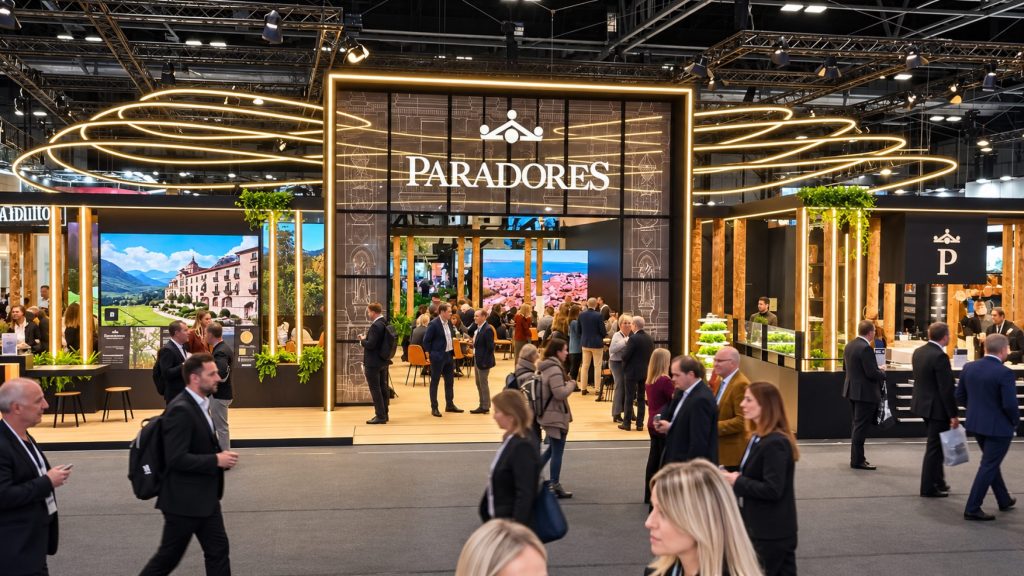
Exhibiting starts well before the doors open and continues after the stand comes down. The space connects the work of inviting people with the conversations and follow-up that come next.
Before: decide who you need to reach
Start with a specific objective and the people you need to meet. Check that the event attracts those audiences, then give them a clear reason to visit.
The invitation and the stand should tell the same story. If you promise a demonstration, book the time, prepare the content and make sure the team can deliver it. If the priority is meetings, make them easy to arrange and give them a suitable setting.
During: make the offer tangible
Design gives the brand a presence and organises what happens inside. Architecture, lighting and imagery help attract and orient people; the team turns that initial attention into a useful conversation.
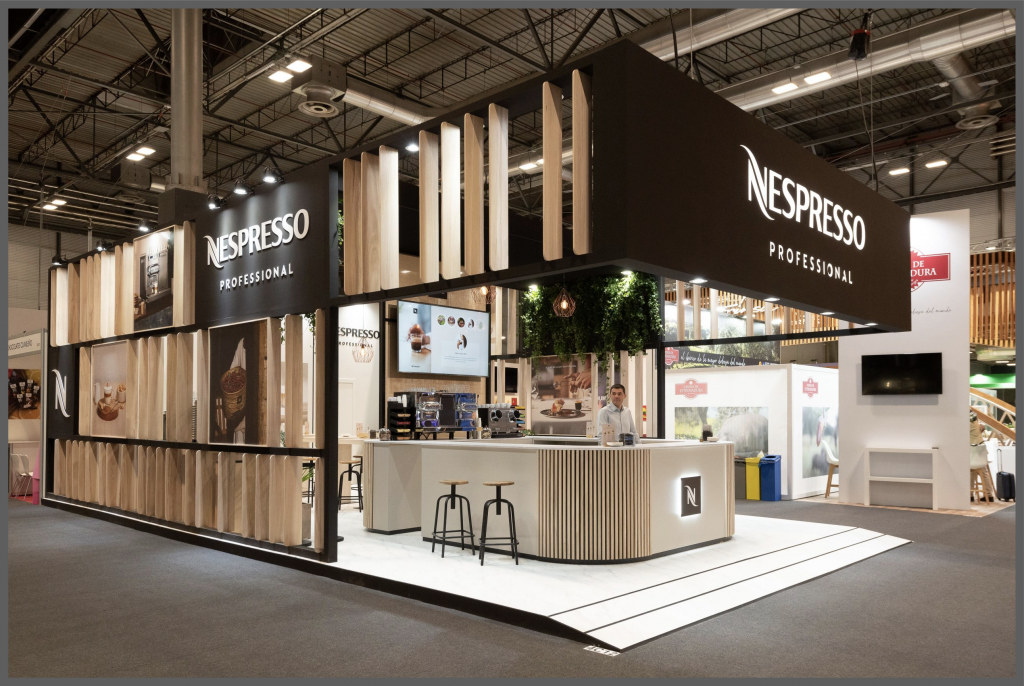
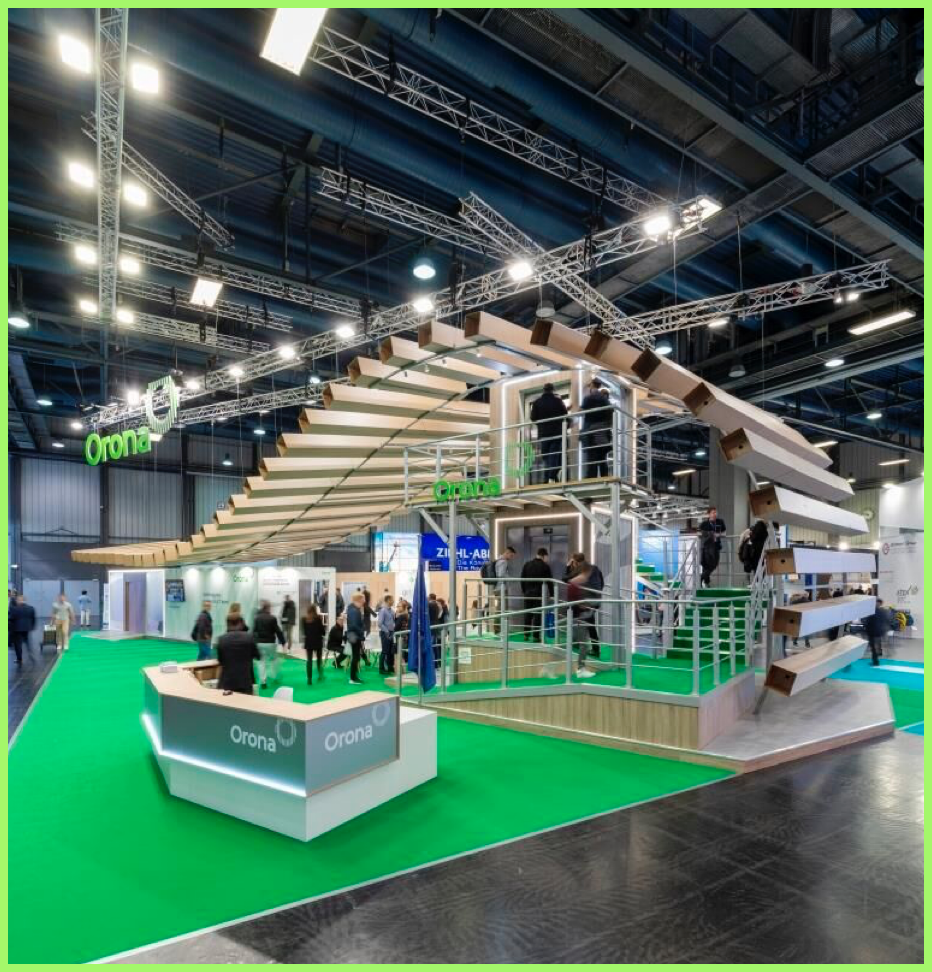
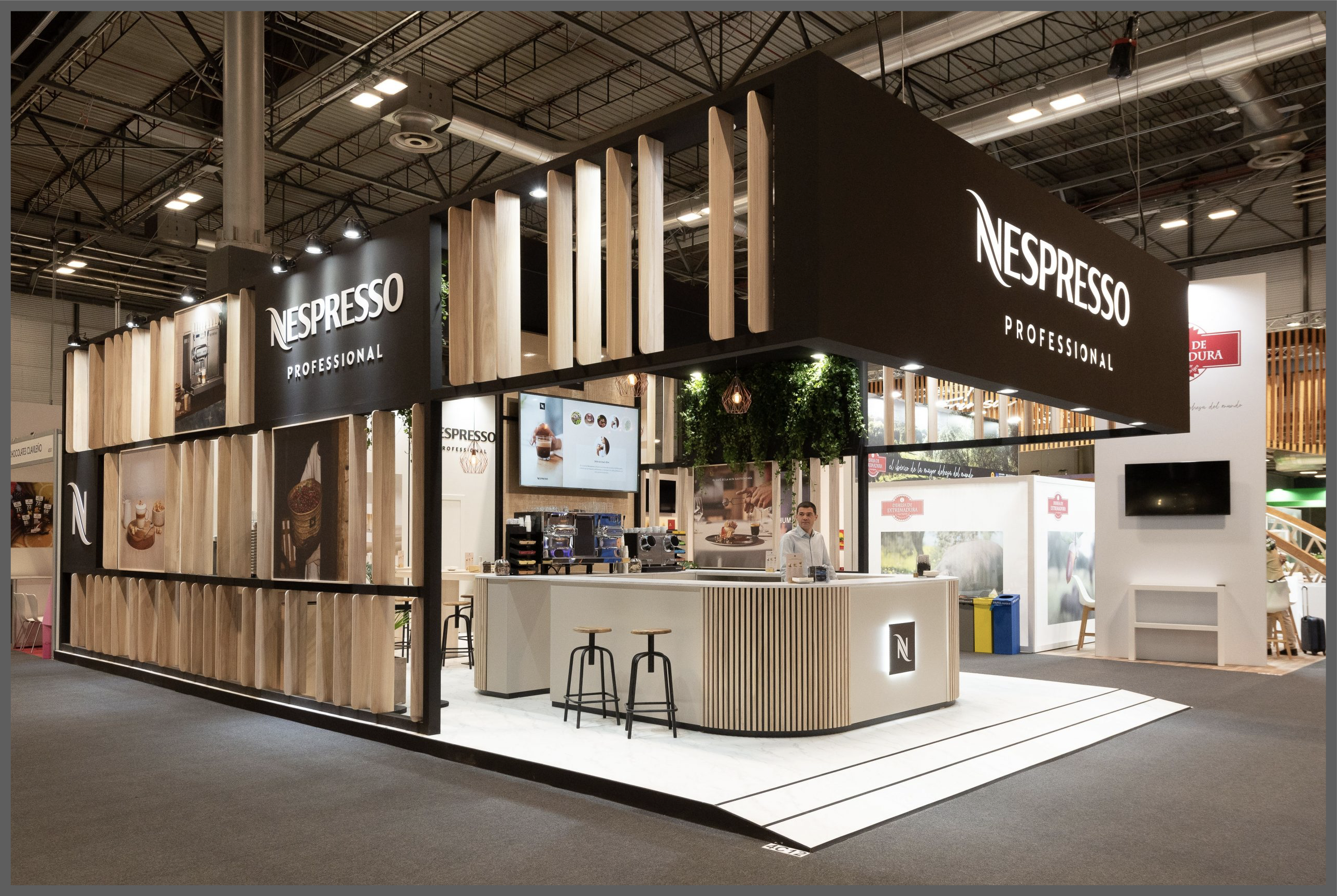
The Nespresso and Orona projects pictured in this article were developed by noisySTUDIO. They show why different businesses need different settings. A counter, a demonstration area or a meeting space matters when it supports what visitors have come to do.
Not every encounter is a qualified lead. Record what interested the person, what need they described and what you agreed to do next, using the data collection process established for the event.
After: pick up the conversation
Follow-up should reflect the discussion, rather than sending everyone the same message. Give each commitment an owner and a date so that it can move forward.
When reviewing the event, distinguish activity from outcome. Visits, demonstrations and meetings describe what happened at the stand. Later proposals and opportunities help explain its commercial contribution. Design alone cannot take credit for results that also depend on the offer, the team and the follow-up.
Think beyond the event itself
At noisySTUDIO, we approach the space as part of that wider sequence. The aim is a recognisable brand, a reason to step inside and a conversation that can continue after the show.