Exhibition projects bring marketing, design, production and event teams into the same conversation. This glossary gives them a shared vocabulary for setting the brief and checking what a proposal includes.
People and objectives
Visitor: someone attending the show, whether a professional or a member of the public. Exhibitor: the business or organisation taking part with a stand. Organiser: the team running the event. Stand staff: the people welcoming visitors, explaining the offer and hosting meetings.
Target audience: the people the exhibitor needs to reach. Networking: building professional relationships. Engagement: what visitors actually do, from asking a question to taking part in a demonstration. Lead: a contact whose interest needs to be understood; a collected name is not automatically a sales opportunity. Follow-up: the next steps agreed after a meeting.
Footfall: the number of people passing through or entering an area. Competitor analysis: examining the wider context and other offers. Return on investment: an economic assessment of the outcome attributable to exhibiting, taking its costs into account; keep it distinct from visibility or contact numbers. Sponsorship: support provided in return for agreed exposure or other benefits.
Space and construction
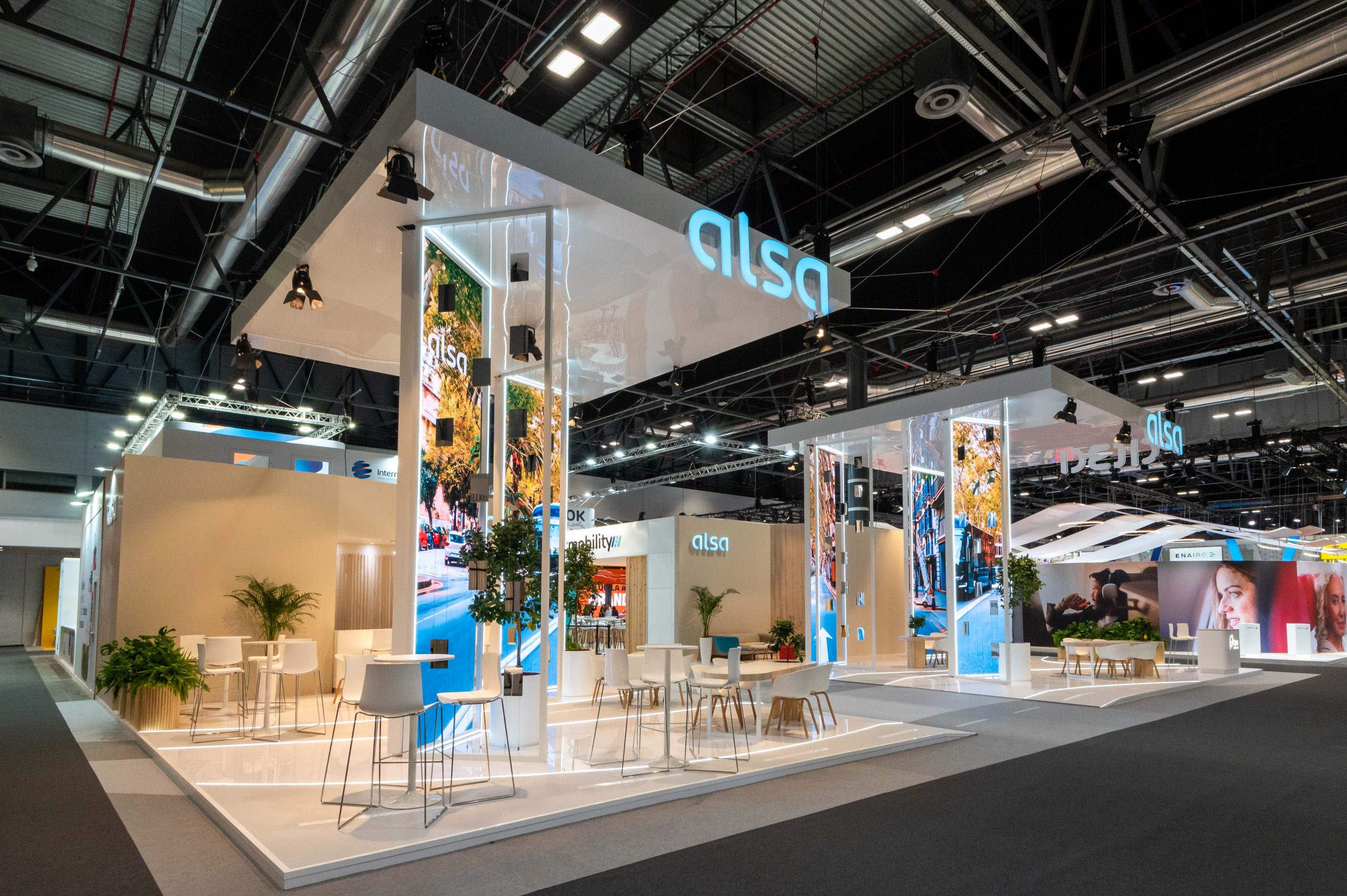
Stand or booth: a brand’s exhibition space. Custom or bespoke stand: developed for a particular brief. Modular stand: built from components that can be adapted. Shell scheme: a basic structure supplied as a package, whose specification must be checked. Space only: floor area hired for a separately arranged build.
Floor plan: the layout of stands and facilities within the hall. Fascia: an upper identification panel, often found on shell schemes. Furniture: the tables, seating, counters and other items that support the space’s use. Biophilic design: an approach that brings relationships with nature into the built environment.
Stand builder: the team producing and installing the project. Logistics: transport, access, deliveries and coordination. Dismantling: taking down and removing the stand after the show. Exhibition schedule: the periods allocated for build, opening and breakdown. Health and safety: the working and visitor conditions addressed through the requirements applicable to the project and venue.
Identity, content and experience
Branding: a coherent expression of the business, extending beyond its logo. Graphics: messages and imagery applied to the space. Collateral: brochures, product sheets and other printed or digital sales material. Promotional materials: items used to support awareness and engagement. Press kit: information prepared for journalists. Exhibition catalogue: the organiser’s directory of participating businesses.
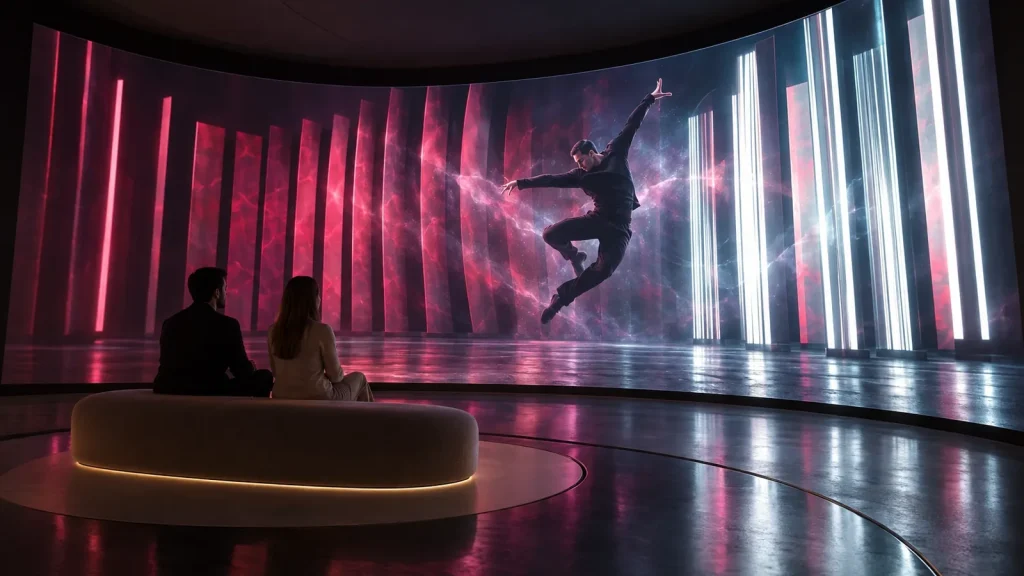
Audiovisual or AV equipment: screens, projection, sound and other presentation systems. Product demonstration: a practical explanation or trial of a particular use. Interactive display: something that responds to a participant’s input. Choose the technology around the intended experience.
Sustainability: decisions about materials, lifespan, reuse, transport and waste. Ask for specific measures rather than relying on an environmental adjective.
Venue and organiser directory
Europe: Messe Frankfurt, Messe Düsseldorf, Koelnmesse, Fiera Milano, Paris Expo Porte de Versailles, Fira Barcelona and IFEMA Madrid. North America: Las Vegas Convention Center and McCormick Place. Asia: Canton Fair Complex and Tokyo Big Sight. Middle East: Dubai World Trade Centre.
Use the directory as a starting point. Confirm services, access and participation requirements with the organiser and venue for the relevant edition.
https://www.messefrankfurt.com/frankfurt/en.html
https://www.messe-duesseldorf.com/
https://www.firabarcelona.com/en/
https://www.mccormickplace.com/
https://www.cantonfair.org.cn/en-US